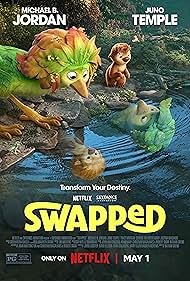
Swapped Netflix Review: Is the New Body-Swap Animated Movie Worth the Watch?
Swapped (2026 Animated Movie) Topic Cluster
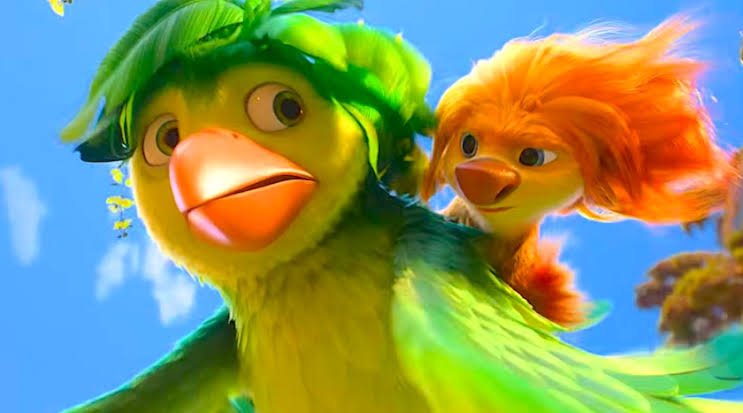
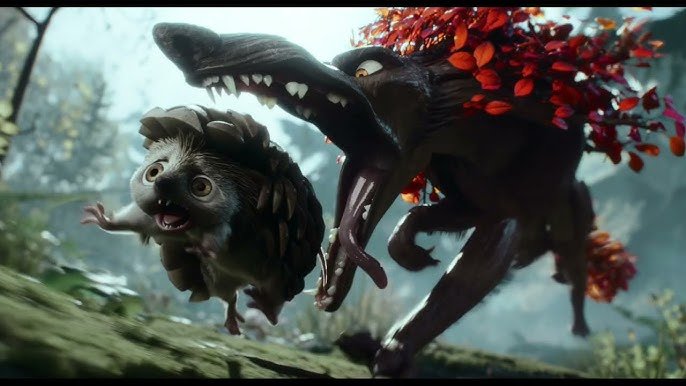
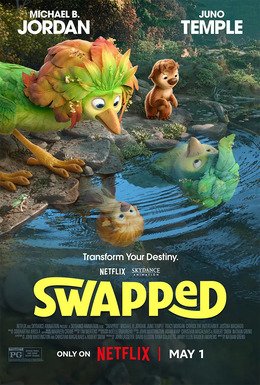
The streaming landscape is flooded with high-concept animated features, but few arrived with the unique industrial baggage and high creative expectations of Skydance Animation’s Swapped (2026). Directed by Nathan Greno—whose creative instincts gave Disney’s Tangled its evergreen appeal—and written by the collaborative team of John Whittington, Christian Magalhães, and Robert Snow, this feature film represents a massive test case for Netflix’s exclusive first-look partnership with Skydance.
Trading its original home at Apple TV+ for a global debut on the world’s largest streaming platform on May 1, 2026, the 98-minute fantasy adventure targets a demanding four-quadrant audience. It attempts to balance family-friendly physical comedy with sophisticated, lore-heavy world-building. In this definitive entertainment journalism review, we evaluate whether Swapped stands as a triumphant masterpiece of modern computer graphics or if its ambitious botanical-fauna premise wilts under the weight of its own narrative machinery.
Narrative Architecture: Subverting a Familiar Creative Trope
At first glance, a movie built entirely around a body-switching mechanic risks feeling derivative. Audiences have seen variations of this concept for decades. However, the screenplay written by Whittington, Magalhães, and Snow manages to avoid the shallow pitfalls of traditional identity-swap comedies by tying the physical transition directly into the socio-ecological fabric of its fictional world.
The Power of Wordless Setup
The film’s structural pacing is brilliant from the opening frames. Industry critics have rightly praised the movie’s dedication to visual-first exposition, highlighted by an opening sequence that runs nearly 10 minutes without traditional dialogue.
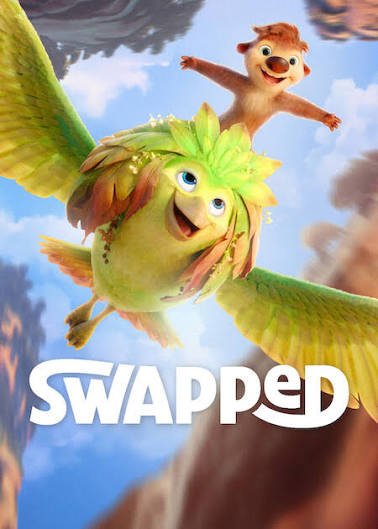
Through a beautifully stylized, silent prologue, the audience is introduced to the deep historical and geographic fracture within The Valley. We see the undergrowth-dwelling Pookoos (sloth-like, moss-furred mammalian hybrids) and the canopy-ruling Javans (leaf-feathered, regal avian hybrids) operating not just as separate species, but as hostile factions locked in a systemic cold war over resources.
Empathy Through Biological Displacement
When the inevitable accidental encounter with an ancient Dzo Pod forces our two primary leads—Ollie (Michael B. Jordan) and Ivy (Juno Temple)—to switch bodies, the film shifts away from superficial personality jokes to focus on the visceral reality of biological displacement. The script treats the swap as an intense physical handicap.
Ollie’s panic inside a massive, aerodynamic avian frame and Ivy’s profound frustration at being bound by a low-to-the-ground, slow-moving mammalian body are played with spectacular situational comedy that doubles as a profound psychological study. The narrative successfully turns the body-swap from a mere comedic gimmick into a high-stakes lesson in systemic empathy, forcing two natural-born class rivals to literally survive a day inside each other’s biology.
Visual Aesthetics: The Triumph of the Analog CG Hybrid
Visually, Swapped is an absolute revelation, establishing a clear aesthetic boundary line between Skydance Animation’s output and the hyper-glossy styles of its mainstream contemporary competitors.
Embracing an Analog Texture
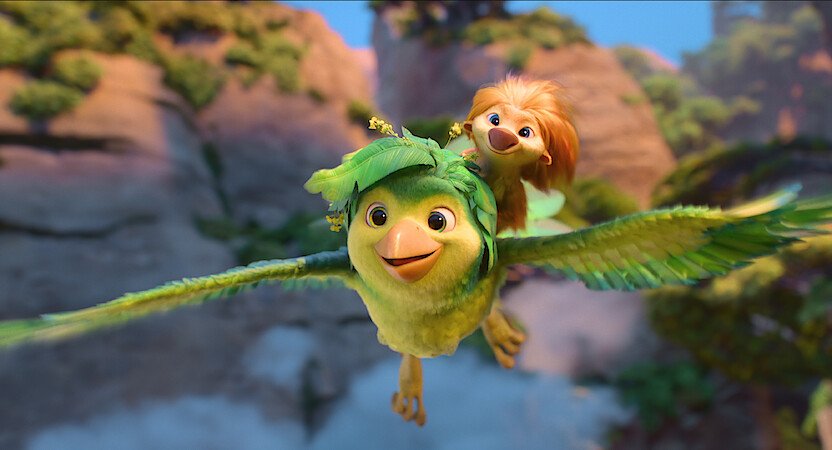
Collaborating across creative pipelines in Los Angeles and Madrid, the technical directors implemented a production style that deliberately embraces a tactile, analog aesthetic. In many sequences, the lighting, shadow depth, and micro-movements of the foliage look less like standard computer-generated models and more like high-end, hand-crafted stop-motion animation.
+————————+————————————-+——————————————–+
| Critical Vector | Technical/Narrative Strength | Creative/Pacing Vulnerability |
+————————+————————————-+——————————————–+
| Character Performance | Expressive, distinct body language | Minor vocal dissonance in early scenes |
| Visual Look-Dev | Analog, stop-motion-like textures | High visual density can clutter background |
| Script Pacing | Brilliant, wordless opening act | Compressed third-act transformation rules |
| Sonic Landscape | Inventive thematic score | Overuse of frantic musical cues in Act 2 |
+————————+————————————-+——————————————–+
The rendering of textures is where the film achieves visual brilliance. Ollie’s fur isn’t just hair; it is a moving surface of microscopic clovers, creeping moss, and living undergrowth that darkens or sheds based on weather conditions. Ivy’s leaf-feathers feature delicate, waxy cuticles that catch light with high-fidelity subsurface scattering, making her community in the high canopies look like a living tropical forest.
Performance Review: Grounding the Fantasy with Vocal Range
A high-concept world populated by plant-animal hybrids can easily alienate an audience if the voice acting feels overly cartoonish. The core ensemble cast grounds the high fantasy with excellent vocal range and emotional sincerity.
Michael B. Jordan and Juno Temple’s Chemistry
Michael B. Jordan delivers a surprisingly vulnerable and transformative performance as Ollie. Stripping away his signature live-action physical authority, Jordan captures the wide-eyed curiosity and frantic panic of a small creature thrust into a massive world.
Opposite him, Juno Temple is superb as Ivy. She infuses the regal Javan bird with a sharp, high-status aristocratic wit that makes her post-swap transition into a tiny, muddy Pookoo exceptionally funny. The vocal friction between Jordan and Temple carries the entire second act, ensuring that their evolving bond feels completely earned rather than forced by the plot.
Tracy Morgan’s Dual Dynamic
Special mention must be reserved for Tracy Morgan, whose character Boogle serves as the film’s chaotic centerpiece. Morgan delivers his characteristic high-octane energy as the algae-finned purple fish, but the narrative pivot in the second half—where Boogle is revealed to be the true identity of the terrifying, ember-breathing Firewolf—allows the film to explore a darker tone. The transition from erratic comic relief to a tragic, isolated creature driven by the pain of past rejection showcases impressive thematic maturity for a family feature.
Final Verdict: A New High-Water Mark for Streaming Animation
While Swapped is an exceptional cinematic achievement, it is not entirely flawless. The film’s final act, while emotionally satisfying, moves at a breakneck pace that leaves some of its fascinating ancient mythology—specifically the origins of the gigantic, tree-like Dzo spirits—feeling slightly rushed. The rules governing how Ollie briefly transforms into a massive Dzo titan to protect his community could have benefited from a few more minutes of narrative exploration.
However, this minor structural compression in the final ten minutes does not diminish the overall impact of the film. By avoiding cheap internet humor and pop-culture catchphrases, Swapped achieves an enduring quality that will reward families upon multiple viewings.
It stands as a visually stunning, deeply empathetic, and technically brilliant feature that easily ranks as Skydance Animation’s finest work to date, proving that with the right creative directors at the helm, streaming animation can deliver cinematic art of the highest order.