Swapped Netflix Plot Explained: Breaking Down the Body-Switching Lore
Swapped (2026 Animated Movie) Topic Cluster
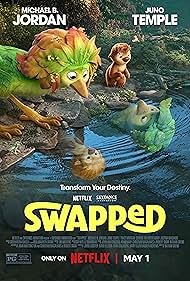
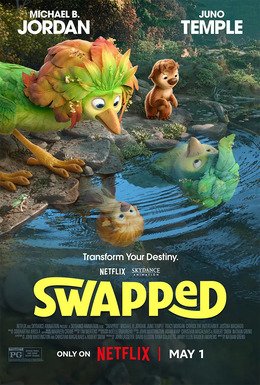
The narrative success of Swapped (2026) hinges on a simple yet infinitely complex question: What happens when the biological “other” is forced to physically exist within the skin of their rival? While the film is dressed in the vibrant, high-energy aesthetics of a modern buddy comedy, the core plot is a carefully constructed exploration of ecological empathy and evolutionary balance.
Directed by Nathan Greno, the film avoids the shallow pitfalls of traditional “freaky Friday” tropes by anchoring its humor in a hyper-detailed, lore-heavy world known as The Valley. In this chapter, we decode the film’s plot architecture, explaining exactly how the body-switch occurs and why the survival of The Valley depends entirely on the resolution of the central protagonists’ conflict.
The Inciting Incident: The Ancient Dzo Spirit
The plot opens with a prologue narrated by the Pookoo Grandmother, establishing that The Valley was once maintained by the Dzo—colossal, ancient creatures that served as the “gardeners” of the world. As they walked, they left behind magical Biological Pods, artifacts intended to foster connection.
Centuries later, this ancient lore has been forgotten. The current inhabitants of The Valley—the moss-covered, ground-dwelling Pookoos and the majestic, leaf-feathered Javans—are locked in an generational stalemate. The Pookoos represent the “undergrowth,” obsessed with safety and tradition, while the Javans embody the “canopy,” focused on prestige and resources.
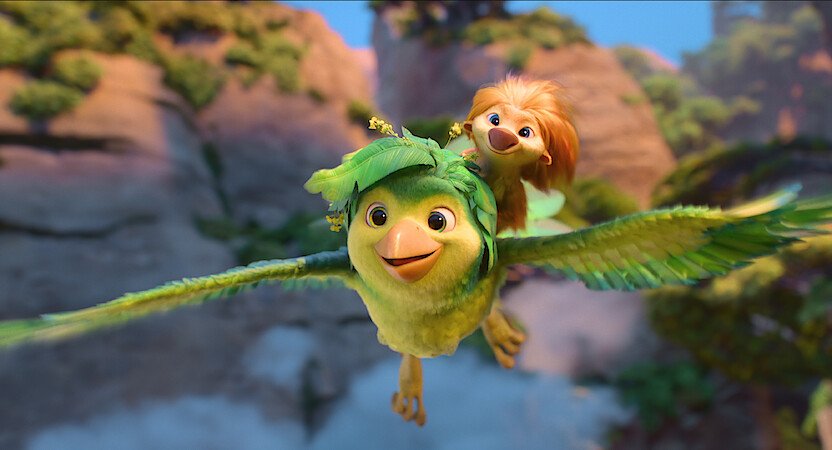
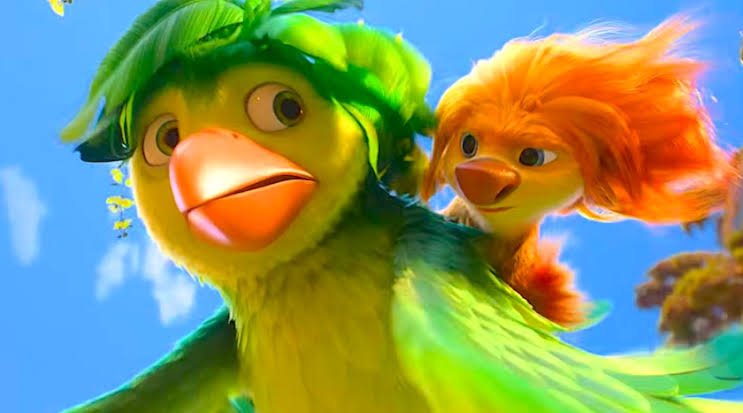
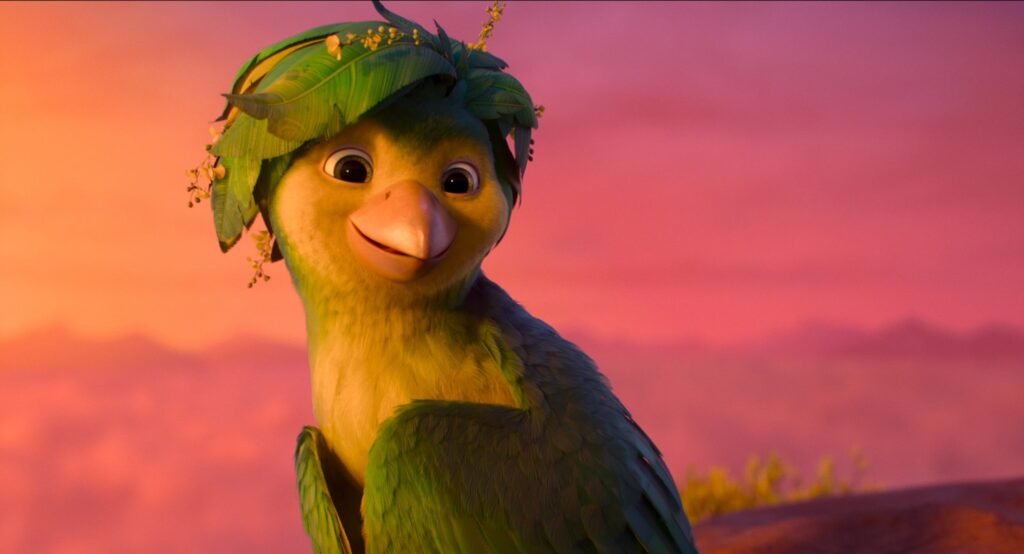
The inciting incident occurs when Ollie (the Pookoo) and Ivy (the Javan) engage in an unintended confrontation near the “Dividing Line,” a canyon that separates their environments. While chasing a falling fruit, both stumble upon an active, glowing Dzo Pod. Upon simultaneous contact, the pod releases a surge of primordial energy, forcing a complete biological inversion. Ollie wakes up in Ivy’s bird body, and Ivy finds herself struggling to move with Ollie’s small, stubby paws.
Act One: The Mechanics of the Switch
The humor and drama in the first third of the film are derived from the brutal reality of their physiological displacement.
The Physicality of Inversion
Unlike typical body-swap movies, Swapped focuses on the visceral mechanics of the transition.
Ollie as a Javan: He is suddenly endowed with a 10-foot wingspan, heightened senses, and the ability to soar. However, he lacks the instincts required to actually fly. The film spends significant screen time showing Ollie accidentally plummeting, crashing into trees, and struggling to coordinate his new limbs.
Ivy as a Pookoo: She is thrust into a world of physical limitations. She is small, slow, and naturally prey-like. She struggles to understand the Pookoo way of life, which involves hiding in tunnels, eating subterranean moss, and fearing the open sky—the very sky she used to command.
This inversion is not just a joke; it is a profound identity crisis. Ollie, who dreamed of seeing the world from above, suddenly has the ability but lacks the grace. Ivy, who felt superior in her high-canopy life, is forced to recognize the fragility and resilience of the “lower” species she once dismissed.
Act Two: The Journey Through the Forbidden Zones
As the protagonists realize the swap is permanent unless they find an ancient “Dzo Shrine” to reverse the energy, they are forced to form an uneasy alliance. The plot shifts into a road-trip structure, taking them through the Forbidden Zones of The Valley.
The Aquatic Waterfall Passage
Early in their trek, they fall into a river and are transformed into aquatic hybrids. This segment introduces Boogle, the eccentric, algae-finned grouper. Through this aquatic sequence, the plot reveals that the body-swap is a “rebalancing” mechanism—a test created by the Dzo to ensure that different species could understand each other’s evolutionary struggles. Boogle serves as the trickster mentor, guiding them through the dangers of the rapids while constantly reminding them that “the outside is only as strong as the heart of the inside.”
The Shadow of the Firewolf
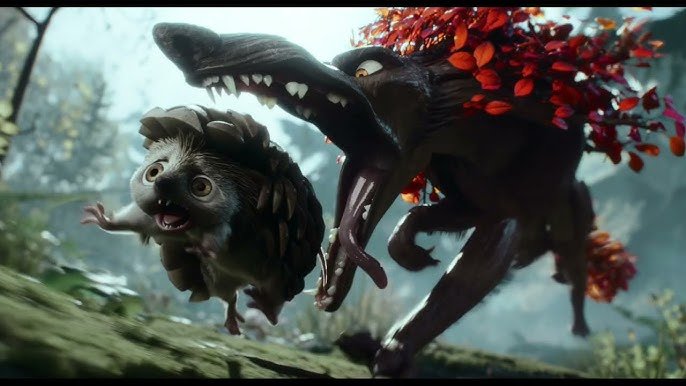
While navigating the treacherous terrain, they are pursued by the Firewolf, a predatory force that embodies the ecosystem’s imbalance. The plot creates an ingenious parallel: the Firewolf is not just hunting them; he is attempting to absorb their swapped energy to trigger a permanent, destructive mutation that would allow him to burn the entire valley, effectively turning the vibrant green environment into a scorched wasteland.
Act Three: The Ecological Climax
The narrative converges at the Dzo Shrine, a sacred clearing where the original pod was birthed. This is where the emotional stakes and the plot collide.
Ollie and Ivy reach the shrine just as the Firewolf arrives. The climax of Swapped avoids a standard “magic blast” resolution. Instead, the final victory is achieved through the very thing the body-swap was designed to force: absolute empathy.
To survive the Firewolf’s heat, Ollie and Ivy must stop fighting their swapped forms and start utilizing them. Ivy, in Ollie’s body, learns to use the Pookoo’s innate connection to the subterranean root network to trigger a defensive growth of giant flora, while Ollie, in Ivy’s body, learns to master the flight mechanics he previously failed at, using his altitude to drop cooling water onto the Firewolf’s flames.
Thematic Resolution: Beyond the Swap
The conclusion of the plot is not just about returning to their original bodies. When the swap is eventually reversed, the characters are fundamentally changed.
The film’s final act shows the integration of the Pookoo and Javan cultures. Ollie is no longer an outcast seeking the sky; he is a bridge-builder who respects the ground he lives on. Ivy is no longer a detached aristocrat of the canopy; she is a leader who understands the vulnerability of those below.
By the time the credits roll, the “Swapped” premise has served its purpose: it has dismantled the binary prejudice of their society. The plot structure is essentially a biological metaphor for the necessity of multicultural understanding—a message delivered not through preaching, but through a high-stakes, visually spectacular journey of forced perspective.