Ladies First 2026 vs I Am Not an Easy Man: Remake Differences Explained
Ladies First





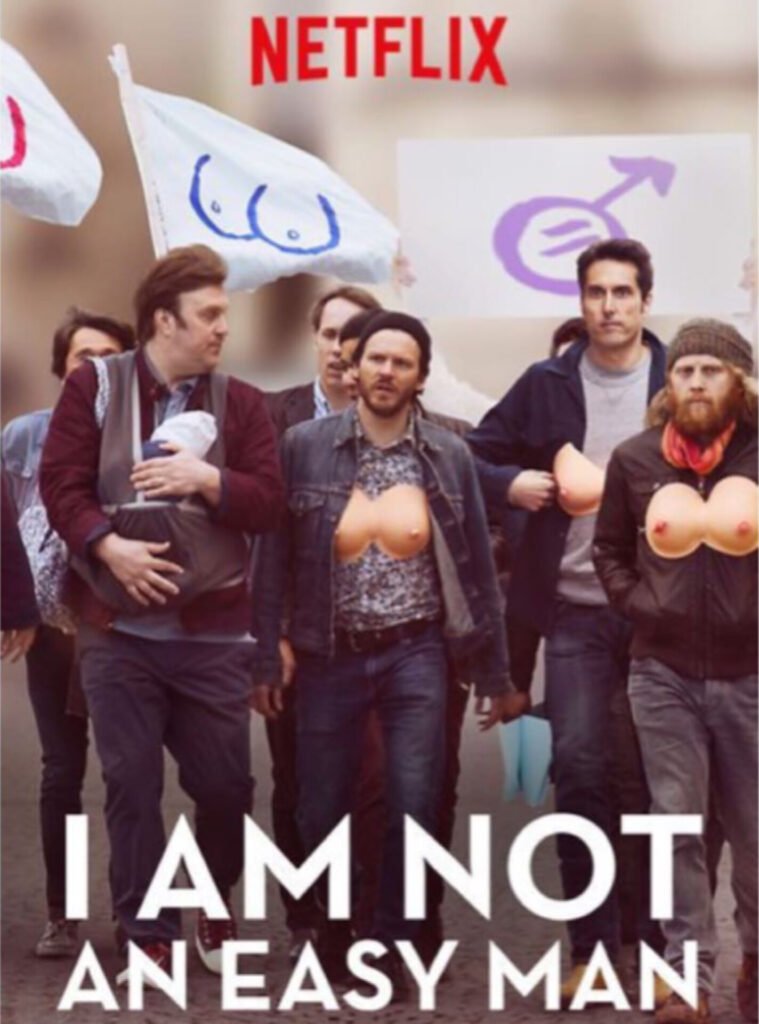

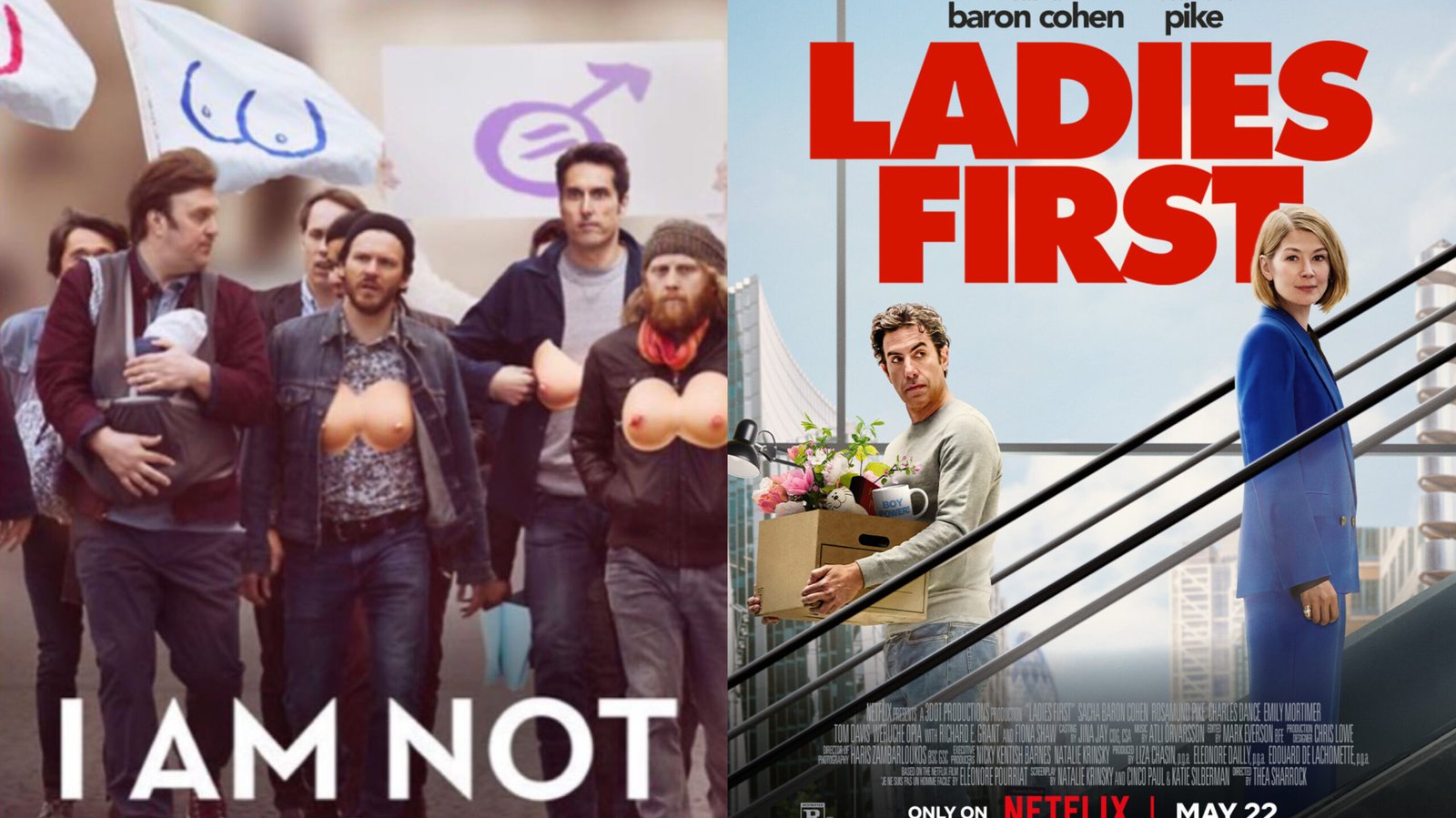
When Netflix dropped Ladies First in May 2026, it immediately rocketed to the top of the global streaming charts. Fueled by a star-studded cast led by Sacha Baron Cohen and Rosamund Pike, the gender-swap comedy became a massive cultural talking point. However, while many casual viewers praised the film for its “original” and “groundbreaking” premise, dedicated film buffs and international cinema fans knew the truth: Ladies First 2026 is not an original concept. It is a direct, big-budget, English-language remake of a much quieter, deeply beloved 2018 French rom-com titled I Am Not an Easy Man (Je Ne Suis Pas Un Homme Facile).
Remaking international hits for an English-speaking audience is a time-honored Hollywood tradition, but it is always a delicate balancing act. How do you translate the cultural nuances of European cinema into a broad, blockbuster format without losing the soul of the story? Directed by Thea Sharrock, the Ladies First 2026 remake takes the foundational premise of the French original and injects it with loud corporate satire, explosive physical comedy, and a massive production budget.
But is bigger always better? In this comprehensive deep dive, we are going to place Ladies First 2026 and I Am Not an Easy Man side-by-side. We will trace the fascinating origins of the story, compare the core characters, analyze the massive shift in tone and setting, and ultimately determine how this high-gloss Hollywood adaptation altered the messaging of the 2018 indie darling.
The Origins: From “Oppressed Majority” to Global Phenomenon
To truly understand the DNA of the Ladies First 2026 remake, we have to go back further than 2018. The entire conceptual universe actually began in 2010 with a gritty, intense 10-minute French short film called Majorité Opprimée (Oppressed Majority), written and directed by Éléonore Pourriat.
Oppressed Majority was not a comedy. It was a harrowing, grounded look at a stay-at-home father who experiences the daily micro-aggressions of a female-dominated society, culminating in a horrific sexual assault on the street. When the short film gained viral international traction on YouTube around 2014, Netflix approached Pourriat to expand the concept into a feature-length project. The result was the 2018 film I Am Not an Easy Man, which softened the brutal edges of the short film, translating the core concept into a romantic comedy starring Vincent Elbaz and Marie-Sophie Ferdane. It made history as the second French-language Netflix original film ever produced.
Fast forward to 2026, and Netflix decided it was time to recycle the intellectual property for a massive global audience. They handed the directorial reins to British director Thea Sharrock (Wicked Little Letters) and brought in a team of American screenwriters (Natalie Krinsky, Cinco Paul, and Katie Silberman) to adapt Pourriat’s script. The result is a fascinating game of cinematic telephone: a traumatic French short film, adapted into a French indie rom-com, which was then adapted into a bombastic, British-American corporate satire.
The Tone Shift: Indie Charm vs. High-Stakes Hollywood Satire
The most immediate and glaring difference between the two films is the overarching tone and pacing. I Am Not an Easy Man operates with a distinctly European indie sensibility. It is quieter, more conversational, and relies heavily on situational irony rather than overt slapstick. The humor in the 2018 film stems from watching a fiercely traditional Parisian chauvinist slowly realize that the subtle, invisible social contracts he relied on to navigate the world no longer apply to him.
The Ladies First 2026 remake, on the other hand, operates at maximum volume from the opening frame. Because it stars Sacha Baron Cohen—an actor practically synonymous with chaotic, high-energy physical comedy—the film leans heavily into broad, farcical humor. There is very little subtlety to Ladies First. When the universe flips, the film makes sure you know it by beating you over the head with visual gags, aggressive background extras, and highly exaggerated corporate archetypes.
While the 2018 film felt like a somewhat grounded “what-if” scenario playing out in the real streets of Paris, the 2026 remake feels like a heightened, candy-colored parallel dimension. The English remake trades the intimacy of the original for the sheer spectacle of a big-budget Hollywood production.
The Protagonists: Two Very Different Damiens
Interestingly, both films retained the first name of the male protagonist, but that is largely where the similarities end.
In I Am Not an Easy Man, Vincent Elbaz plays Damien as a shameless, laid-back Parisian ladies’ man. He is a chauvinist, absolutely, but he operates with a sort of breezy, infuriating charm. He is a man who coasts through life on his good looks and societal privilege, never really having to work too hard or think too deeply. When he wakes up in the matriarchy, his reaction is one of bewildered frustration. He stumbles through the new world like a man who has suddenly forgotten how to speak his native language.
In the Ladies First 2026 remake, Sacha Baron Cohen plays Damien Sachs as a hyper-aggressive, deeply toxic, apex-predator executive. Cohen’s Damien isn’t just coasting; he is actively exploiting the women around him to climb the corporate ladder at the Atlas advertising agency. He is louder, wealthier, and significantly more abrasive than his French counterpart.
This change in the protagonist fundamentally alters the audience’s relationship with the character. In the 2018 film, you want Damien to learn his lesson so he can become a better person. In the 2026 film, Cohen makes Damien so utterly repulsive in the first act that his subsequent suffering in the matriarchal universe feels incredibly vindictive and punitive. The English remake leans much harder into the concept of schadenfreude—finding deep, visceral joy in watching a terrible person endure absolute humiliation.
The Female Lead: The Novelist vs. The Alpha-CEO
The most drastic character alteration between the two films lies in the primary female antagonist/love interest. This shift fundamentally changes the thematic target of the satire.
In the French original, the female lead is Alexandra Lamour (played brilliantly by Marie-Sophie Ferdane). Alexandra is a highly influential, wealthy novelist. In the matriarchal reality, she is an unapologetic female chauvinist who uses men for her own pleasure and discards them. The dynamic between Damien and Alexandra is deeply rooted in bohemian, literary circles. It is a battle of wits, seduction, and intellectual dominance.
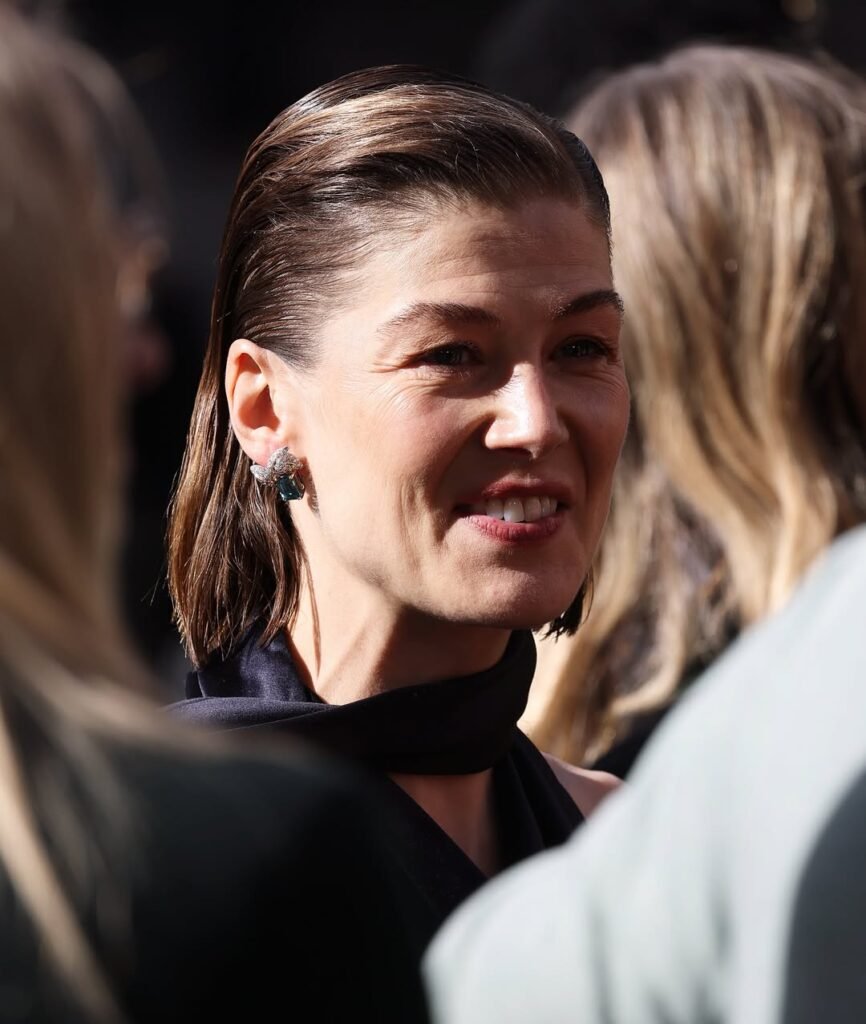
The Ladies First 2026 remake entirely abandons the literary angle in favor of cutthroat capitalism. Rosamund Pike steps into the role of Alex Fox, shifting the character from an artistic novelist to a ruthless advertising executive. As we discussed in her character profile, Pike plays Alex with a terrifying, sociopathic grace that echoes her role in Gone Girl.
This is a massive tonal departure. By moving the conflict from the Parisian literary scene to a high-stakes London advertising agency, Ladies First transforms the story from a romantic comedy into a biting corporate satire. The power dynamic isn’t just about who controls the bedroom; it is about who controls the boardroom, the economy, and the systemic flow of capital. Pike’s Alex Fox isn’t just an arrogant artist; she is the ultimate physical manifestation of unchecked corporate power.
The Corporate Setting: Advertising, “Femvertising,” and Guinness
Because the 2026 remake shifted the setting to the Atlas advertising agency, the mechanics of the plot had to change to accommodate the new environment.
In I Am Not an Easy Man, Damien’s struggle in the matriarchal universe revolves around him trying to find his footing, eventually becoming an author himself, and writing a subversive book about male empowerment that mirrors real-world feminist literature. It is an exploration of gender politics through the lens of art and media consumption.
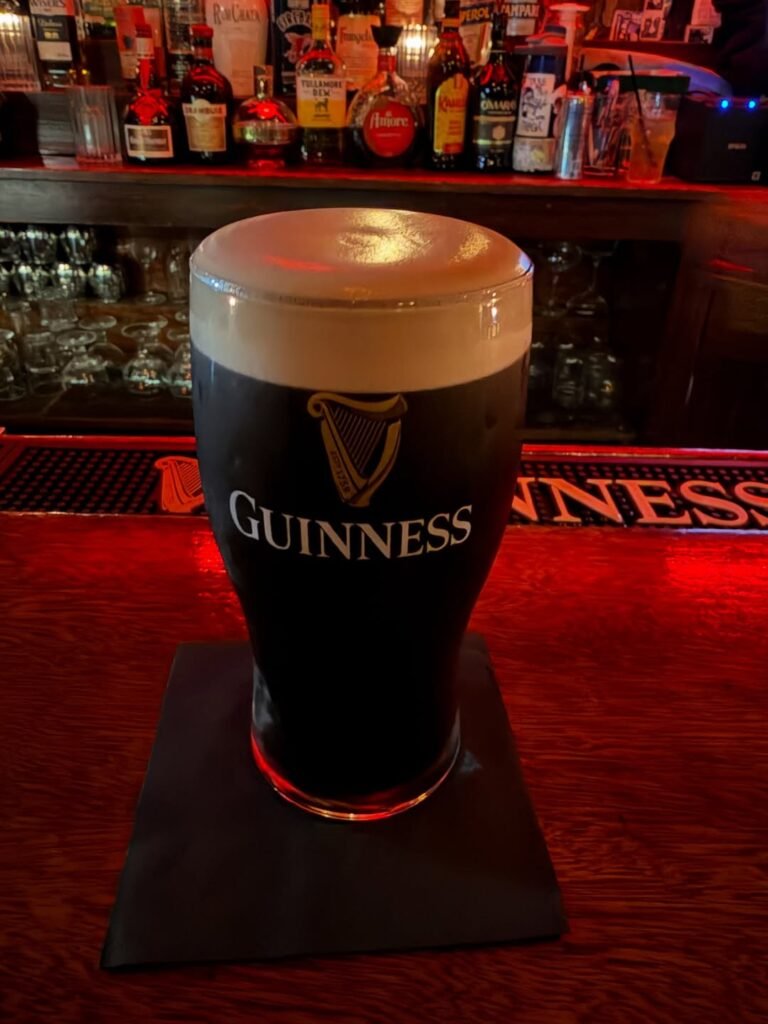
The Ladies First 2026 remake anchors its entire plot around a singular, high-stakes pitch for the Guinness beer brand. As we covered in our previous breakdown, the Guinness campaign is the inciting incident of the film. Damien’s desperate lie about Alex’s involvement in the pitch causes the fateful argument that sends him to the alternate universe. Once in the matriarchy, his entire survival strategy hinges on reverse-engineering the Guinness pitch to appeal to the “alpha female.”
This structural change makes the English remake far more cynical. The 2018 film was interested in how society values male and female voices differently. The 2026 film is primarily interested in how massive corporations exploit gender politics to sell products. The heavy integration of the Guinness brand—while highly controversial among critics—gives Ladies First a distinctly modern, capitalistic edge that the French original simply did not have.
Visual World-Building: Paris vs. London
The difference in budget between the two Netflix productions is glaringly obvious when analyzing the visual world-building.
I Am Not an Easy Man relies on subtle visual cues to sell the matriarchal flip. The changes in Paris are mostly behavioral. You see women jogging shirtless in the park, men wearing short-shorts, and subtle shifts in body language. It feels incredibly grounded.
Ladies First, operating with a massive Hollywood budget, redesigns the entire physical landscape of London. The visual satire is dialed up to eleven. The billboards, the corporate architecture, the exaggerated, restrictive fashion forced upon the men, and the expansive, structural power-suits worn by the women all contribute to a world that feels aggressively stylized.
Director Thea Sharrock also utilizes the supporting cast to highlight the world-building in a way the French original didn’t have the bandwidth to do. Watching legendary actors like Charles Dance (reduced to a meek, shuffling assistant) and Fiona Shaw (elevated to a terrifying CEO) provides a layer of meta-comedic brilliance that is entirely unique to the English remake.
The Satirical Execution: Nuance vs. Broad Strokes
Ultimately, the most significant difference between the two films is how they execute their central thesis.
Critics of Ladies First 2026 heavily targeted the film for relying on a “one-joke” premise. They argued that by simply having women act exactly like toxic men—womanspreading, constantly talking over their subordinates, and engaging in brazen sexual harassment—the film lacked nuance. It was a literal 1:1 role reversal that didn’t explore how a society built by women from the ground up might actually function differently.
The 2018 French original, while not perfect, attempted to weave a slightly more complex tapestry. By utilizing the literary world, it explored the subtle ways language and art are used to oppress marginalized groups, providing a slightly more intellectual approach to the gender-swap concept.
However, one could easily argue that the broad strokes of Ladies First are exactly what made it a massive commercial success. By removing the subtlety, the 2026 remake ensures that the audience cannot possibly miss the point. Watching Sacha Baron Cohen squirm under the crushing weight of impossible beauty standards and workplace objectification is viscerally entertaining. The English remake prioritizes catharsis over philosophy, delivering a loud, incredibly shiny, and highly digestible piece of pop-feminism.
Conclusion: Which Version is Superior?
Choosing a definitive “better” film between Ladies First 2026 and I Am Not an Easy Man entirely depends on what you value as a viewer.
If you prefer your satire to be thoughtful, intimate, and grounded in realistic character interactions, the 2018 French original remains the superior, more intellectual film. It respects the origin of the concept and delivers a charming, if slightly uneven, romantic comedy.
However, if you want high-octane corporate drama, devastatingly funny physical performances, and the sheer joy of watching Rosamund Pike absolutely decimate a room full of men with a single icy glare, the Ladies First 2026 remake is undeniably entertaining. It took an indie concept, strapped a rocket to it, and turned it into a blockbuster spectacle.