

Mackenzie Shirilla Text Messages: The Graphic Texts Released After Netflix’s The Crash
The Crash Netflix: Deconstructing the Strongsville Tragedy






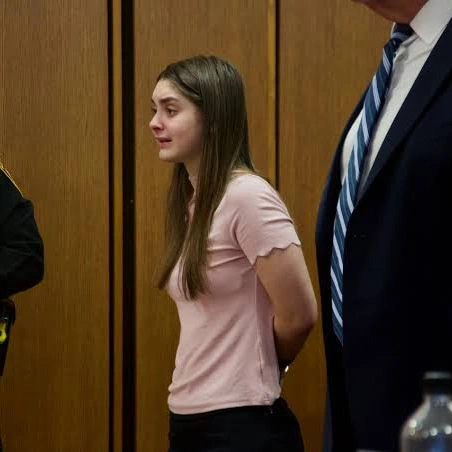


When Cuyahoga County prosecutors pivoted from treating the July 31, 2022 wreckage as a horrific vehicular accident to pursuing a capital double-murder conviction, they did not rely solely on the physical data stored within the vehicle’s black box. While the 100% throttle reading proved how the car hit the wall, it was the digital forensics team that supplied the answer to why. Following the massive wave of public interest generated by the 2026 premiere of Netflix’s true-crime documentary The Crash, the Strongsville Police Department executed a historic public records release. At the center of this release was an extraordinary digital archive: a comprehensive log containing approximately 32,000 text messages exchanged between Mackenzie Shirilla and her boyfriend, Dominic Russo.
This text archive represents the structural backbone of the state’s premeditation argument. The messages do not merely depict the standard emotional volatility of a teenage romance; instead, they serve as a chronological roadmap of escalating psychological warfare, physical abuse, and overt, literal threats against life. In the arena of modern digital forensics, your smartphone is a silent archivist of your darkest intentions. For Mackenzie Shirilla, her own text message history became the primary mechanism of her undoing.
The Text Log: Chronology of a Toxic Dynamic

To accurately analyze the digital records presented during the bench trial, one must understand the sheer volume of the data pool. A log of 32,000 individual communications indicates a near-constant state of digital connectivity and surveillance between Mackenzie and Dominic over their multi-year relationship. When specialized forensic software extracted these conversations from the recovered devices, investigators began sorting the messages chronologically to identify behavioral inflection points.
The early phases of the text archive depict a pattern of extreme attachment combined with severe emotional volatility. The data shows an unhealthy cycle of rapid escalations—where minor social misunderstandings triggered immediate, text-bombing behaviors characterized by capital letters, explicit insults, and repetitive messaging sequences designed to monopolize Dominic’s attention. However, as the timeline advanced into early 2022, the nature of the communications shifted from defensive emotional outbursts to an explicit, controlling framework. The prosecution successfully argued that Mackenzie utilized her digital presence to establish complete domain over Dominic’s social movements, personal relationships, and independent autonomy.
The Literal Threat Framework: “My Way or the Highway”
As the summer of 2022 approached, the text messages evolved from relational toxicity into explicit criminal liabilities. Prosecutors introduced specific, targeted excerpts into evidence that directly countered the defense’s narrative of a loving, non-violent relationship. The text stream reveals that Mackenzie routinely weaponized threats of property damage and physical harm as leverage during arguments.
In another highly disturbing sequence recovered from a June 2022 exchange, following a prolonged disagreement regarding Dominic’s choice of social interactions, Mackenzie explicitly typed: “THIS IS WHY I J WANNA F—ING KMS [kill myself]” immediately followed by the chilling declaration, “I’m gonna kill someone.”
During cross-examination, the prosecution emphasized the structural syntax of these messages. These were not casual expressions of teenage frustration spoken in the heat of a verbal argument; they were permanent, written statements transmitted across cellular networks. The digital record established that Mackenzie viewed the relationship as a zero-sum game. The threat matrix she constructed explicitly tied Dominic’s compliance to his physical safety, creating a digital paper trail that directly demonstrated a state of mind capable of lethal orchestration.
The Physical Abuse Component in the Text Ledger
One of the most legally damaging aspects of the text archive did not originate from Mackenzie’s phone, but from messages Dominic sent to his immediate circle, describing the physical reality of living within the relationship. In a series of text messages sent in March 2022 to his brother, Angelo Russo, Dominic explicitly documented instances of physical battery.
Dominic wrote that Mackenzie had “hit me” during a domestic dispute and detailed a separate, terrifying escalation where she “tried to throw a rock at me” during an argument outside a residence. This digital evidence transformed the public perception of the case, shifting it from a tragic story of a reckless young driver to a documented chronicle of domestic abuse where the male victim was systematically isolated and subjected to physical violence.
Furthermore, the state introduced a crucial piece of behavioral testimony from a close family friend who recounted an incident occurring just weeks before the fatal crash. During a heated argument while operating a vehicle, witnesses heard Mackenzie state with absolute clarity, “I’m going to wreck this car right now.” This specific statement served as the connective tissue for the prosecution, linking her past verbal and digital threats directly to the mechanical execution that occurred on July 31, 2022. It proved that using a multi-ton vehicle as a weapon of domestic retaliation was an active concept within Mackenzie’s behavioral repertoire long before she entered the Progress Drive industrial park.
Forensic Analysis of the Text Messages Closest to the Crash
Perhaps the most complex element of the digital forensics ledger—and one that The Crash documentary examines with clinical precision—is the nature of the text messages exchanged in the final 48 hours leading up to the 100 mph impact. True-crime analysts often look for a definitive, explosive text exchange right before a crime occurs. However, the forensic log reveals an entirely different, and arguably more unsettling, reality.
In the hours immediately preceding the collision, the text stream between Mackenzie and Dominic appeared remarkably ordinary. They coordinated logistics, discussed social plans, and arranged to pick up Davion Flanagan to give him a ride home. Legal and behavioral experts featured in the Netflix documentary, including former FBI behavioral analysts, point out that this sudden drop in overt textual hostility can be interpreted in two distinctly competing ways:
The Defense Interpretation: The lack of an active, raging text argument in the hours before the crash indicates that there was no immediate, acute motive for murder on that specific morning. The defense team maintains that the ordinary nature of the final messages supports their theory of an unpredictable, sudden medical blackout caused by an undiagnosed condition, rather than a planned suicide-homicide event.
The Prosecution Interpretation: The calm before the storm represents a chilling behavioral state known as “predatory compliance.” Prosecutors argued that Mackenzie had already made her definitive decision. Once the internal resolve to execute the act is finalized, the need for overt digital arguing ceases. The ordinary texts were merely operational steps designed to get Dominic into the passenger seat without triggering his survival instincts or defensive posturing.
Regardless of the conflicting psychological interpretations, the 32,000 text messages permanently stripped Mackenzie Shirilla of the “innocent teenager caught in a tragic accident” defense. When laid bare before a court of law, the digital archive exposed a foundational architecture of control, violent ideation, and explicit threats. It converted the physical mechanical data of the 100 mph impact into an open-and-shut case of purposeful, premeditated double murder.