

The Mackenzie Shirilla Trial: Why the Judge Called Her Hell on Wheels in The Crash Case
The Crash Netflix: Deconstructing the Strongsville Tragedy







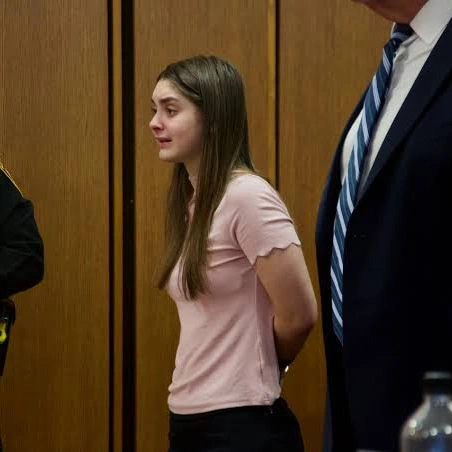


When the legal proceedings against Mackenzie Shirilla reached their climax in August 2023, the venue was not a crowded gallery watching a standard jury deliberation. Instead, the fate of the 19-year-old was placed entirely in the hands of a single individual: Cuyahoga County Common Pleas Judge Nancy Margaret Russo. Following the 2026 global surge in viewership for Netflix’s true-crime documentary The Crash, legal analysts have zeroed in on this trial’s unique structure. By opting for a bench trial—where a judge alone acts as both finder of fact and arbiter of law—the defense made a calculated gamble that backfired catastrophically.
The trial did not merely conclude with a standard announcement of a verdict. It ended with a scathing, meticulously articulated judicial tongue-lashing that permanently defined the case in true-crime history. Judge Russo did not view the tragedy on Progress Drive as a manifestation of teenage recklessness, drag racing, or a tragic vehicular accident. She categorized it clinically as an execution. In announcing her multi-count murder conviction, the judge used a phrase that instantly went viral across news networks and forms the thematic center of the Netflix documentary: she branded the teenager as “literal hell on wheels.”
The Strategy Behind Choosing a Bench Trial
The defense team calculated that a seasoned, professional judge would look past the public outrage and examine the hyper-technical medical evidence of her POTS diagnosis and the abstract physics of accident reconstruction with clinical detachment. They believed a judge would be less susceptible to the emotional gravity of two dead teenagers than twelve ordinary citizens.
However, this strategy entirely underestimated Judge Nancy Margaret Russo’s reputation for fierce, unyielding intolerance toward domestic violence and obfuscation. By removing the buffer of a jury, the defense allowed the judge to interact directly with the raw evidence. When the state presented its case, the judge did not filter the data through standard legal abstractions; she evaluated it with a blunt realism that proved fatal to Mackenzie’s freedom.
Murder vs. Reckless Homicide: The Legal Threshold
The core legal battleground of the trial centered on the statutory definition of Murder under Ohio Revised Code, specifically the distinction between a purposeful killing and reckless vehicular homicide. The defense repeatedly argued that even if the court rejected the POTS blackout theory, the state could only prove that Mackenzie was driving with extreme recklessness—a charge that carries a significantly lower prison sentence and permits eventual rehabilitation.
To secure a murder conviction, Assistant Cuyahoga County Prosecutor Tim Troup had to prove beyond a reasonable doubt that Mackenzie acted with purposeful intent—meaning she knew her actions would result in death and actively desired that outcome. The prosecution successfully cleared this high evidentiary bar by weaving together three distinct elements:
The Obscure, Isolated Route: The crash did not occur on a main thoroughfare where an out-of-control vehicle might be expected to drift. It took place deep within an obscure industrial park layout. The judge heavily emphasized this in her final assessment, noting that Mackenzie deliberately chose a completely empty business park at 5:30 a.m. on a Sunday—a time and place where no witnesses would be present to intervene, flag down help, or render immediate life-saving first aid.
The Concept of Premeditation via Scoping: Digital forensics revealed that Mackenzie had driven through that exact, dead-end business corridor three days prior to the wreck. Because she had no logical business or residential reason to visit that industrial complex, the state argued—and the judge accepted—that this trip was an intentional scouting mission to select a lethal, unyielding target.
The Irrelevance of Shared Danger: The defense attempted to argue that Mackenzie could not have intended to commit murder because she easily could have died in the crash herself. Judge Russo flatly dismantled this claim in her verdict, stating on the record: “Even if Mackenzie also intended to die in this crash, that is irrelevant. A failed suicide attempt is not a defense to murder.”
Dissecting the “Hell on Wheels” Verdict Announcement
The final day of the trial provided the most dramatic footage utilized in The Crash documentary. Standing before the bench, Mackenzie Shirilla listened as Judge Russo systematically demolished her narrative of innocence. The judge’s delivery was methodical, deliberate, and entirely devoid of sympathy for the defendant, focusing instead on the calculated precision of the crime.
“Her actions were controlled, methodical, deliberate, intentional, and purposeful,” Judge Russo declared to the silent courtroom. “This was not reckless driving. This was murder.”
The judge then traced the final drive down the business park street, describing how the vehicle transitioned from a standard suburban car into a weapon of mass destruction. “She morphs from a responsible driver to literal hell on wheels as she makes her way down the street… She alone decided to push the pedal to the floor and demand the ultimate speed of that vehicle to 92 mph. She alone decided what was to be. Mackenzie decided death was the ultimate goal that day.”
The Verdict and Concurrent Life Sentences
Ultimately, Judge Russo found Mackenzie Shirilla guilty on 12 distinct felony counts: four counts of murder, four counts of felonious assault, two counts of aggravated vehicular homicide, one count of drug possession, and one count of possessing criminal tools (the vehicle itself).
During the sentencing phase, the emotional weight of the courtroom shifted to the maximum penalty allowed by law. While the families of Dominic Russo and Davion Flanagan pleaded for the consecutive stacking of her sentences—which would ensure she remained behind bars for a minimum of 30 years—Judge Russo ultimately sentenced her to two life terms to be served concurrently.
This means Mackenzie was sentenced to an aggregate term of 15 years to life in prison. While some true-crime viewers of the Netflix documentary criticize this concurrent structure as overly lenient, Judge Russo clarified her legal reasoning on the record. She noted that under the jurisdiction of the Ohio Department of Rehabilitation and Correction, a 15-to-life sentence does not guarantee an automatic release at the 15-year mark. By establishing a permanent record of a purposeful double-murder conviction, the judge noted she was confident that the parole board would look at her complete lack of remorse and deny her release for decades to come, keeping her securely behind bars long past her initial 2037 eligibility date.