

Inside The Crash on Netflix: The Real Story of the Strongsville 100 MPH Tragedy
The Crash Netflix: Deconstructing the Strongsville Tragedy




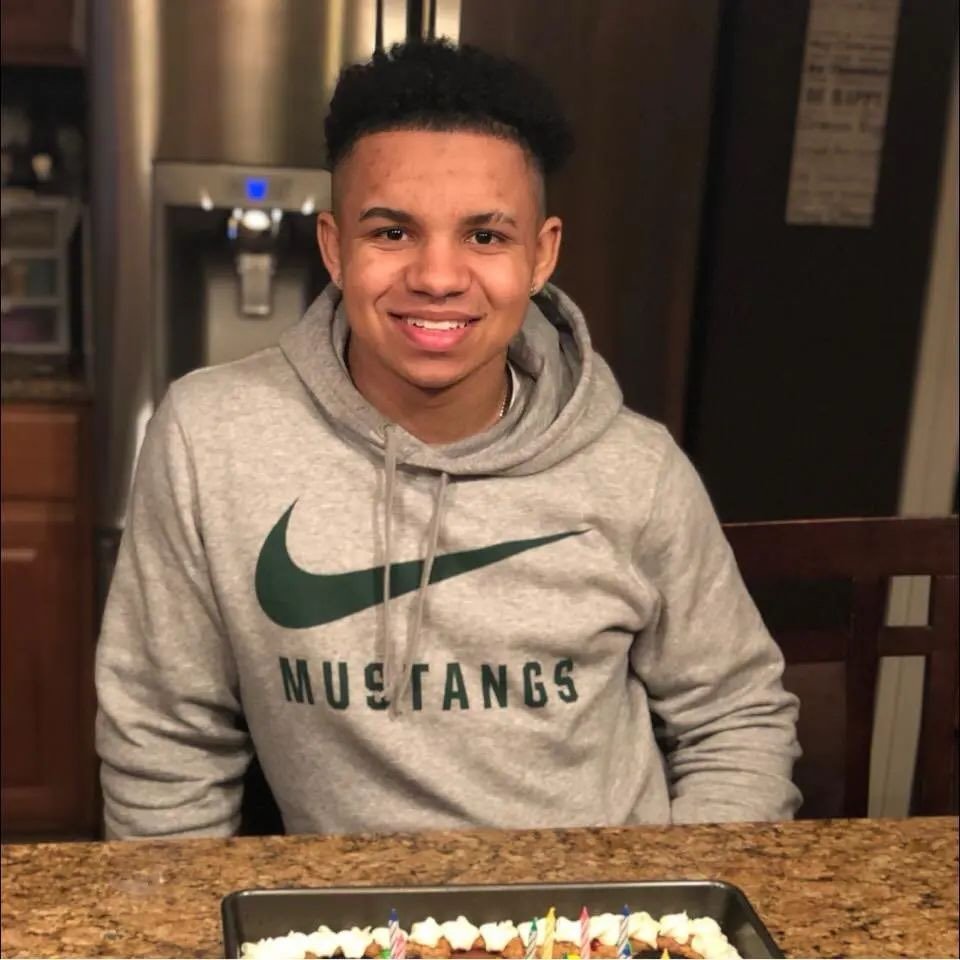

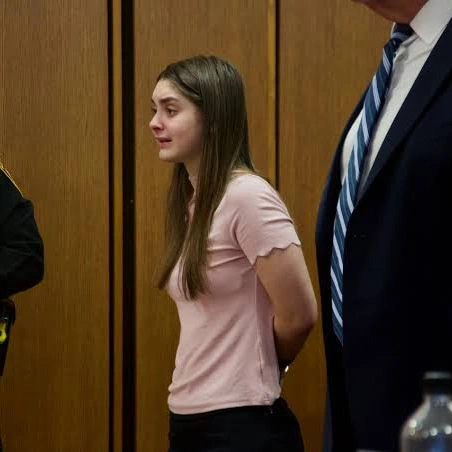


The dark, quiet streets of the Progress Drive business park in Strongsville, Ohio, are typically barren at 5:30 a.m. But on July 31, 2022, the pre-dawn silence of this Cleveland suburb was shattered by the roaring scream of a 2012 Toyota Camry engine. Traveling at an astronomical speed for a narrow commercial road, the vehicle did not drift, veer, or slide. It accelerated with absolute intent. Moments later, it collided head-on with a commercial brick building. The impact was catastrophic, flattening the front end of the sedan and instantly claiming the lives of 20-year-old Dominic Russo and 19-year-old Davion Flanagan. The driver, 17-year-old Mackenzie Shirilla, was the sole survivor.
When Netflix released its gripping true-crime documentary series The Crash, true crime enthusiasts and legal analysts worldwide were forced to confront a deeply unsettling narrative. What initially looked like a tragic, horrific accident involving local teenagers quickly unraveled into something far more sinister. Through meticulous investigation, telematics, and digital forensic tracking, law enforcement built a case that shocked the nation. This was not a story of reckless teenage driving or a momentary lapse in judgment. According to the state of Ohio, it was a cold, calculated, and executed double homicide.
The Fateful Morning of July 31, 2022

To truly understand how this case divided a community and captured global attention, one must look at the precise timeline of that summer morning. Hours before the impact, Mackenzie Shirilla, Dominic Russo, and Davion Flanagan had been spending time together at a friend’s house. Davion, a beloved local high school football player who had recently graduated, was not involved in the complicated personal dynamics between Mackenzie and Dominic. He simply needed a ride home, a casual favor that would ultimately cost him his life.
The trio entered Mackenzie’s Toyota Camry with Mackenzie behind the wheel, Dominic in the front passenger seat, and Davion in the rear. Security cameras and data trackers later revealed a chilling sequence of events. Instead of navigating the standard residential routes toward their homes, Mackenzie directed the vehicle toward the nearby industrial park.
The environment was secluded, surrounded by heavy brick facades and commercial warehouses completely empty during the early Sunday morning hours. At approximately 5:30 a.m., the Camry turned onto Progress Drive. What happened next forms the central pillar of the prosecution’s murder case. The vehicle began a hyper-aggressive acceleration, transforming the suburban car into a high-velocity missile directed squarely at a thick, reinforced brick wall.
Deciphering the Physics of the 100 MPH Impact
When local first responders arrived at the scene, the destruction they witnessed resembled a high-speed highway collision rather than an accident on a minor commercial road. The front half of the Camry was completely compacted, the engine block shoved violently backward into the passenger cabin. Emergency personnel worked frantically to extricate the occupants, but for Dominic Russo and Davion Flanagan, the forces of the impact were simply unsurvivable. Both young men were pronounced dead at the scene due to severe blunt-force trauma.
Mackenzie Shirilla, though critically injured and trapped within the wreckage, was alive. She was rushed to a local trauma center with multiple fractures and severe injuries, beginning a long physical recovery that would eventually transition directly into a legal nightmare.
As the Strongsville Police Department and accident reconstruction experts began examining the debris field, the traditional indicators of a driver trying to avoid a collision were completely absent.
The Total Absence of Skid Marks: In standard vehicular accidents where a driver loses control, falls asleep, or panics, the road surface bears the physical evidence of their sudden panic. Tire track geometry, rubber transfer lines, and heavy skid marks show where brakes were locked or anti-lock braking systems (ABS) engaged. On Progress Drive, the asphalt was pristine right up to the point of impact. There was no evidence of braking whatsoever.
The Steering Geometry: Investigators meticulously mapped the trajectory of the Camry. The road leading to the commercial building was not a perfectly straight line; it featured subtle curves and lane shifts characteristic of an industrial park entry. Had the driver been completely unconscious or dead weight behind the wheel, physics dictates that the vehicle would have continued in a straight line, drifting off the tarmac and striking curbs, grass embankments, or utility poles long before hitting the wall. Instead, the vehicle flawlessly followed the curvature of the road at escalating speeds, indicating active, conscious steering inputs.
The Vehicle’s Black Box Content Unlocked
The definitive turning point in the initial investigation came when detectives extracted and analyzed the data from the Toyota Camry’s Event Data Recorder (EDR), commonly known as the vehicle’s “black box.” In modern automotive forensics, the EDR acts as an unyielding, objective witness, capturing precise mechanical metrics in the critical seconds leading up to a deployment-level impact.
The data recovered from Mackenzie Shirilla’s vehicle left no room for speculation regarding driver input. The telematics revealed that in the final five seconds before slamming into the brick wall, the accelerator pedal was pressed down to 100% throttle capacity.
This was not a case of a foot slipping onto the gas or a vehicle accelerating out of control due to a mechanical failure. To maintain a 100% throttle reading for five consecutive seconds requires a driver to deliberately and firmly pin the accelerator to the floorboard with sustained physical force.
Furthermore, the EDR confirmed that the brake pedal reading remained at absolute zero throughout the entire sequence. The vehicle’s mechanical systems, steering linkage, and throttle body were all functioning flawlessly, completely eliminating the defense’s early theories of sudden vehicle malfunction or stuck pedals. The data painted an undeniable picture: the driver wanted maximum speed, pushed the vehicle to its absolute limits, and deliberately targeted the brick structure.
Turning a Traffic Accident into a Double Murder Case

With the black box data in hand, the focus of the Strongsville Police Department and the Cuyahoga County Prosecutor’s Office shifted dramatically. This was no longer an investigation into aggravated vehicular homicide or reckless operation. The absolute precision of the drive, the sustained acceleration, and the deliberate choice of an isolated, lethal target met the legal threshold for premeditation and purposeful intent.
Investigators began digging deeply into the lives, relationships, and digital histories of the occupants. They discovered a sprawling web of volatile arguments, toxic relationship dynamics, and ominous digital statements that provided a clear, terrifying motive. Mackenzie Shirilla was not a victim of a terrible automotive malfunction; prosecutors alleged she was a deeply troubled, controlling young woman who had decided that if she could not possess Dominic Russo, no one would. The presence of Davion Flanagan in the back seat was a cruel, secondary tragedy—an innocent bystander caught in the crosshairs of a deadly domestic execution.
In the days and weeks that followed, as Mackenzie recovered in her hospital bed, detectives quietly assembled an ironclad case. The evidence moved from the physical asphalt of Progress Drive to the digital servers of Snapchat, Instagram, and cell phone carriers. When the formal indictments were handed down, the charge was clear: four counts of murder. The small town of Strongsville was forced to realize that the horrific wreck on July 31 was not a random tragedy, but a calculated execution carried out at 100 miles per hour.